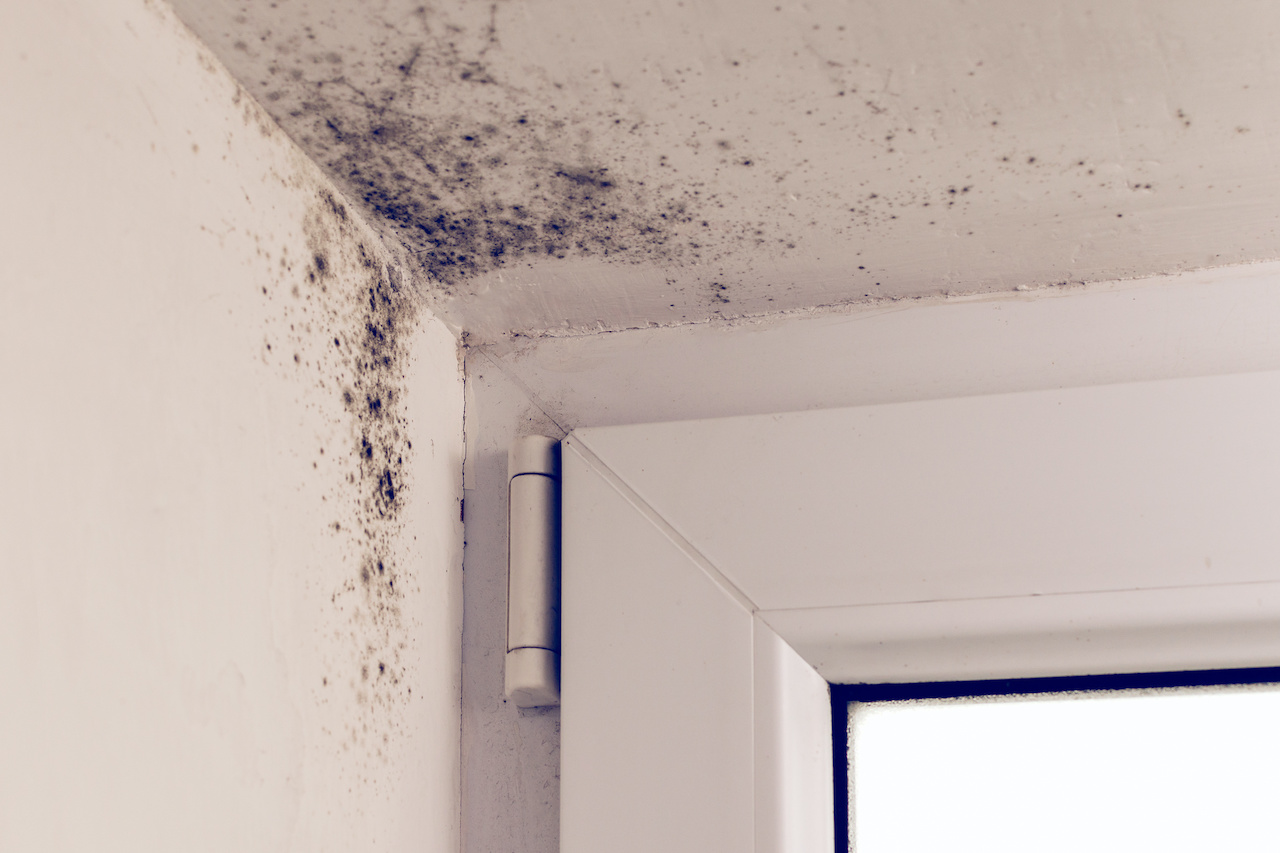
Western Washington humidity makes mold a chronic problem, not a freak event. The crews we work with find the moisture driving it, remove the growth under containment, and verify the space is clear.
Visual & moisture inspection
Air and surface sampling
Negative-pressure containment
HEPA filtration & removal
Crawlspace & attic remediation
Post-remediation clearance
Our process
1
Inspect & test
Moisture meters, thermal imaging, and lab sampling establish what's growing and why.
2
Contain
Negative air machines and sheeting keep spores out of the rest of the home.
3
Remove & clean
Affected materials are removed, surfaces HEPA-vacuumed and treated with antimicrobials.
4
Fix the source & verify
We correct the moisture problem and run clearance testing before closing the job.
Warning signs you shouldn't ignore
Most of the expensive jobs we see in King and Pierce County started as something small that looked survivable for a few weeks. These are the signals worth acting on.
Musty smell in one room
Microbial volatile organic compounds are detectable long before growth is visible.
Black spotting on window sills
Condensation on single-pane and aluminum-frame windows feeds surface mold every winter.
Symptoms that improve when you leave
Congestion, headaches, or asthma flare-ups that fade away from home point at indoor air quality.
Sagging or stained crawlspace insulation
Fallen batts almost always mean the vapor barrier or a supply line has failed underneath.
Dark streaks on attic sheathing
Usually condensation from bath fans or dryers venting into the attic rather than through the roof.
Peeling paint or bubbling wallpaper
Moisture behind the finish is pushing outward — growth is typically already in the substrate.
Why mold is a Puget Sound problem, not a Puget Sound accident
Between October and May, Western Washington runs cool and wet, with outdoor humidity high enough that houses never fully dry out on their own. Add tight modern envelopes, unvented crawlspaces in older Seattle and Tacoma stock, and bath fans that either don't run long enough or vent into the attic, and you get a climate where mold doesn't need a burst pipe to establish itself. It just needs a cold surface and a few weeks.
That's the practical difference between here and drier regions: a mold job in Seattle is usually a moisture-management problem with a cleanup attached, not a one-time cleanup. If the source isn't corrected, the growth comes back within a season, and paying twice is a common outcome.
Where mold actually shows up in local homes
Most remediation scopes in King and Pierce County concentrate in a handful of predictable places.
Crawlspaces: torn vapor barriers, standing groundwater, and rot in subfloor sheathing and joists.
Attics: condensation on the underside of roof sheathing from bath fans, dryer vents, or blocked soffit ventilation.
Bathrooms: behind tile, under vinyl flooring, and inside the wall below a leaking shower pan.
Under kitchen sinks and behind dishwashers: slow supply and drain leaks nobody sees for months.
Exterior-wall closets and north-facing corners: cold surfaces plus stagnant air equal condensation.
Basements and daylight-basement walls: hydrostatic moisture wicking through concrete into finished framing.
Testing: when it's worth the money and when it isn't
If you can see mold and you know where the water came from, testing usually just delays the fix — the remediation scope would be the same either way. Testing earns its cost in four situations: hidden growth you can smell but can't find, occupants with health complaints or immune sensitivity, real-estate transactions where a documented baseline protects both parties, and post-remediation clearance to prove the work succeeded.
Air sampling compares indoor spore counts to an outdoor control taken the same day. Surface and tape-lift samples identify what's on a specific material. Neither test tells you whether a home is 'safe' in absolute terms — there's no federal cleanup standard for mold spore counts — but a proper comparison to outdoor baseline is the accepted way to show a space is back to normal.
For clearance, use an independent hygienist where possible. A contractor who tests their own work has an obvious conflict of interest.
What proper remediation looks like
Remediation follows the IICRC S520 standard, and the difference between a real job and a spray-and-pray job is visible from the driveway. Real remediation builds containment: polyethylene sheeting sealing the work area, a negative air machine with HEPA filtration exhausting outside, and controlled entry so spores don't ride into the rest of the house on a technician's shoulder.
Inside containment, porous materials with growth — drywall, insulation, carpet pad — are removed rather than cleaned, because you cannot scrub something out of a material's interior. Semi-porous framing is HEPA-vacuumed, wire-brushed or soda-blasted where needed, then treated with an antimicrobial. Bleach is not a remediation tool on porous surfaces; the water in it feeds what remains behind the surface stain.
The last step is the one that determines whether you're doing this again in two years: correcting the moisture source. That might be a vapor barrier and crawlspace drainage, a bath fan ducted through the roof with a timer, gutter and grading work, or a dehumidifier sized for the space.
Mold and insurance in Washington
Most Washington homeowners policies treat mold as a consequence, not a peril. Coverage typically applies when the mold results directly from a covered water loss that was reported and mitigated promptly, and many policies cap mold remediation at a sublimit — often somewhere between $5,000 and $10,000 — even when it's covered at all.
Mold caused by long-term seepage, deferred maintenance, humidity, or flooding is generally excluded. That's why documenting the origin and the date of the underlying water event matters so much: it's the difference between a covered claim and an out-of-pocket project.
If you're a landlord or a tenant, Washington's Residential Landlord-Tenant Act adds disclosure and habitability obligations around known mold conditions, which is worth reviewing before a dispute starts.
What this work typically involves
Ranges below reflect typical residential scopes in the Puget Sound market. Every property is different — your written assessment is the only number that matters for your claim.
Scope
Typical range
What drives the number
Inspection with moisture mapping
$0 – $600
Free with an assessment request; lab sampling adds cost
Air and surface lab sampling
$300 – $1,000
Number of samples and turnaround time
Small contained area (bathroom, closet)
$800 – $3,000
Containment setup, material removal, HEPA cleaning
Crawlspace remediation
$3,000 – $12,000
Square footage, vapor barrier and insulation replacement
Attic remediation
$2,500 – $9,000
Sheathing treatment plus ventilation corrections
Whole-home or structural remediation
$10,000 – $30,000+
Extent of growth, demolition, rebuild scope
Ranges reflect typical Puget Sound residential projects for planning purposes only, and exclude reconstruction unless noted.
Common questions
Do I need testing before remediation?
If mold is visible and the source is obvious, testing is optional. Testing matters for hidden growth, health complaints, or real-estate transactions.
Is mold covered by insurance?
Often only when it results from a covered water loss and was reported promptly, and usually up to a policy sublimit. We document the origin so your claim isn't denied by default.
Can I stay in the house?
Usually yes. Containment and negative pressure keep work areas isolated, though we'll advise otherwise for large or sensitive-occupant jobs.
Will bleach fix it?
Not on porous materials. Bleach removes the color and adds water; the growth beneath the surface survives and often returns stronger.
How long does remediation take?
A contained bathroom is usually one to two days. Crawlspaces and attics run three to five, and whole-home projects longer once rebuild is included.
Is black mold more dangerous?
Color doesn't determine risk, and no lab result determines it either. Any significant indoor growth should be removed and its moisture source corrected regardless of species.
Mold help near you
We route requests to vetted local crews throughout King and Pierce County. Pick your city for local conditions and coverage details.