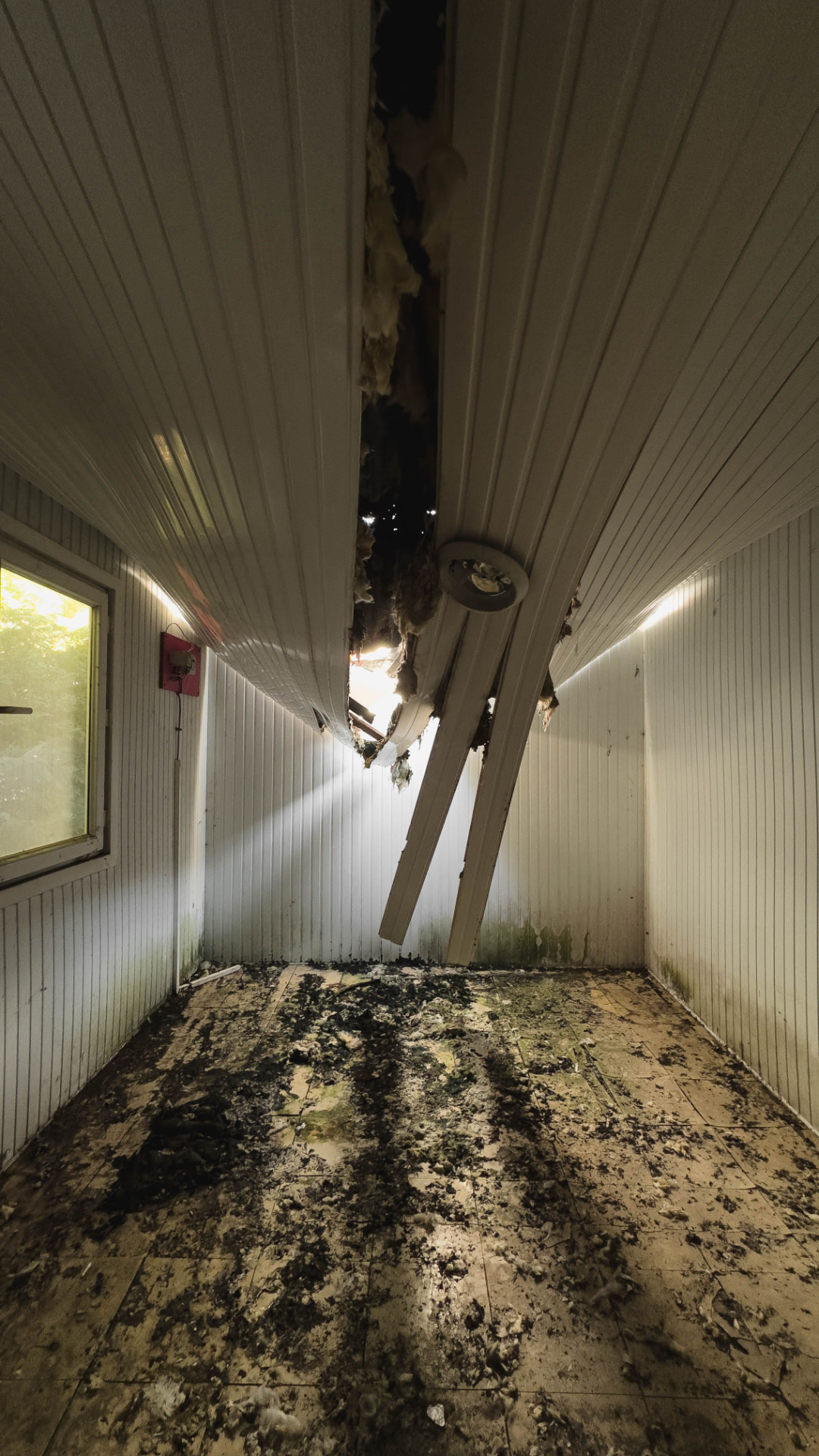
Fire damage is rarely just fire. Soot, corrosive residues, water from suppression, and embedded odor all have to be handled in the right order — and in the right sequence for your claim.
Emergency board-up & tarping
Soot and char removal
Smoke odor neutralization
Contents pack-out & cleaning
HVAC and duct decontamination
Post-suppression water drying
Our process
1
Secure the property
Board-up, tarping, and hazard assessment so the structure is safe and weather-tight.
2
Residue & water mitigation
Suppression water is extracted and dried while soot residues are stabilized.
3
Cleaning & deodorization
Surface-specific cleaning plus hydroxyl or ozone treatment to remove odor at the source.
4
Repair & restore
Contents returned, finishes rebuilt, and a full claim file delivered.
Warning signs you shouldn't ignore
Most of the expensive jobs we see in King and Pierce County started as something small that looked survivable for a few weeks. These are the signals worth acting on.
Yellowing on walls or fixtures
Acidic smoke residue etches paint, chrome, and appliance finishes within days if it isn't neutralized.
Smell that returns on warm days
Heat reactivates odor molecules trapped in porous materials — the source was masked, not removed.
Soot in rooms far from the fire
Smoke follows airflow. Untouched rooms and closed closets frequently hold residue.
Sticky film on windows
Protein residue from a kitchen fire is nearly invisible but coats every hard surface.
Tarnished metals and mirrors
Corrosion is a sign residues are still active and still doing damage.
HVAC blowing an odor
Ductwork distributes soot through the house every time the system runs.
Smoke does more damage than most people expect
A contained kitchen fire can leave a house structurally fine and still uninhabitable. Smoke is a suspension of unburned particles and acidic gases that moves with air pressure — into wall cavities, up through can lights, along ductwork, into drawers that were closed the whole time. When it settles, it doesn't just sit there. Chlorides and other acidic compounds pull moisture from the air and begin etching metal, glass, grout, and painted surfaces.
That's why timing matters after a fire almost as much as after a flood. Residue that is cleaned in the first few days usually comes off. Residue left for two weeks can permanently pit fixtures and stain finishes that would otherwise have been saved.
Different fires leave different residues
The cleaning method has to match the residue, which is why generic scrubbing often makes things worse by driving particles deeper into porous surfaces.
Dry smoke (fast, high-temperature fires): powdery residue that vacuums and dry-sponges off, but travels furthest into cracks and cavities.
Wet smoke (slow, smoldering fires): thick, sticky, strong-smelling residue that smears and requires solvent cleaning.
Protein residue (kitchen fires): almost invisible, discolors paint and varnish, and carries an intense lingering odor.
Fuel oil soot (furnace puff-backs): oily and pervasive, usually coating every room served by the heating system.
Why the water damage comes first
Fire suppression puts hundreds or thousands of gallons into a structure, and sprinklers or hose lines often soak floors below the fire. Left alone, that water produces the same mold problem any other loss would, on top of the soot. Any competent post-fire scope handles extraction and structural drying in parallel with residue stabilization, not after it.
This is also where a lot of poorly run fire jobs go wrong: crews focus on visible char, the building stays wet for a week, and the homeowner ends up with a mold remediation project stacked on their fire claim.
Odor removal that actually lasts
Deodorizing is the last step, not the first. Odor comes from residues, so anything sprayed over unremoved soot buys a few weeks at most. The sequence that holds up is: remove unsalvageable materials, clean every affected surface with a method matched to the residue, seal surfaces that can't be fully cleaned (framing, subfloor), then treat the air and remaining porous materials.
Air treatment options include hydroxyl generators, which are safe to run in occupied spaces and work more slowly, and ozone, which is faster and stronger but requires the space to be vacated. Thermal fogging is used to reach the same pathways smoke traveled. Duct cleaning is nearly always required after a significant fire because the system will otherwise reintroduce odor for years.
Contents, inventory, and your claim
Most fire claims have two sides: structure and contents. The contents side is where homeowners lose the most money, because the burden of proof is on you to list what was damaged and what it was worth. A good restoration crew inventories items room by room, photographs them, and separates salvageable from non-salvageable with a reason attached to each entry.
Salvageable items are typically packed out and cleaned off-site with ultrasonic, ozone chamber, or hand-cleaning methods, then stored until the structure is habitable. Electronics need specialty attention quickly — acidic residue inside a device keeps corroding long after the outside is wiped down.
Ask for your inventory and photo file in writing. It's your leverage in the claim and your record if items go missing during storage.
What this work typically involves
Ranges below reflect typical residential scopes in the Puget Sound market. Every property is different — your written assessment is the only number that matters for your claim.
Ranges are general Puget Sound estimates for planning only. Actual cost comes from the on-site scope and your carrier's approval.
Common questions
Can smoke smell really be removed?
Yes — but only if residues are removed first. Deodorizing over soot masks the smell temporarily; we clean, seal where needed, then treat the air.
What about items that weren't burned?
Smoke travels. We inventory and clean salvageable contents off-site and list non-salvageable items for your claim.
How long does a fire job take?
Mitigation typically runs 3-10 days. Full reconstruction depends on scope and permitting, and we'll give you a timeline in writing.
Is it safe to enter after the fire department leaves?
Only after they clear it, and even then briefly. Soot is a respiratory irritant and structural damage isn't always visible from inside.
Does insurance cover a fire I accidentally caused?
Usually yes. Accidental fires — cooking, candles, electrical — are standard covered perils. Intentional acts and some vacancy situations are not.
Should I clean the soot myself?
Wiping soot with a household cleaner typically drives it into the surface and can permanently stain paint and stone. Dry cleanup by a trained crew salvages far more.
Fire & Smoke help near you
We route requests to vetted local crews throughout King and Pierce County. Pick your city for local conditions and coverage details.